
Here’s a thinking process that could lead to the provided Spanish response:
1. **Deconstruct the User’s Request:**
* **Role:** Meticulous Spanish blog writer specializing in hypnosis and persuasive psychology.
* **Core Task:** Rewrite a source text ethically and clearly (without copying), mixing and paraphrasing the central idea.
* **Hook Structure:** 3-step hook (Context → Contrast Twist → Final Curiosity). One sentence per line.
* **Topic/Title:** “Configurar hora en Kindle japonés: Guía paso a paso” (Setting time on Japanese Kindle: Step-by-step guide).
* **Keywords:** Kindle, Japanese, configure, time, adjust, zone, timezone, Tokyo, Amazon, settings, date, time, synchronize, manual, screen.
* **Style Conditions (a lot to unpack):**
* **Personal Experience:** Include 1-2 first-person experiences.
* **Emotion:** Natural, not exaggerated, no excessive punctuation.
* **Sentence Length:** Alternate short (5-10 words) and long (30-50 words) sentences.
* **Tone:** Conversational (use phrases like “…¿no te ha pasado…?”, “…ya sabes…”).
* **Metaphors:** Use 1-2 everyday metaphors.
* **Questions:** Ask 1-2 direct questions to the reader.
* **Twist:** Introduce 1 unexpected twist in the development.
* **Imperfection:** Allow for 1-2 sentences expressing doubt or uncertainty.
* **Tone Variation:** Start serene, middle emotive, end calm.
* **Jargon:** Explain technical terms in common language.
* **Repetition:** Avoid repeating the same word consecutively (use synonyms).
* **Structure for Part 1 (1000-2000 characters):**
* Base information and key points.
* Moment/place/actors (if applicable).
* Reactions or testimonials (if they exist).
* **Source:** Provided Japanese blog post about setting time on a Japanese Kindle.
2. **Analyze the Source Material (even if I can’t read Japanese perfectly):**
* The core idea from the excerpt and the visible text is clear: A Japanese Kindle, even when bought from Amazon, doesn’t have its time set to Japan by default. The user provides step-by-step instructions to fix this.
* Steps (paraphrased from the visible text/translation):
1. Go to Kindle Home.
2. Time is displayed at the top.
3. Tap slightly below the time display to bring up a tab menu.
4. Options: “Unlock”, “Volume”, “Brightness”, “Wireless”, “Sync”, “Other”.
5. Tap “Other”.
6. Then: Settings → Device → Date & Time → Set Timezone → Japan Standard Time (Tokyo).
* This is the factual core I need to paraphrase and explain clearly.
3. **Brainstorm the “Hook” (3 Steps):**
* **Context:** Setting the scene. The joy of getting a new Kindle, especially a Japanese model.
* **Contrast Twist:** The unexpected problem. It’s a Japanese device, but the time is wrong, set to a different timezone (like the US). This creates a puzzle.
* **Final Curiosity:** Posing a question that makes the reader want to know the solution. “How do you sync this digital clock to your local rhythm?”
4. **Incorporate Style Conditions (Meticulously):**
* **First-Person Experience:** I’ll create a scenario. “Recuerdo la primera vez que encendí mi Kindle japonés…” (I remember the first time I turned on my Japanese Kindle…). Maybe another one about trying to figure it out.
* **Emotion:** Keep it natural. Frustration at the wrong time, satisfaction at fixing it. No “¡Increíble!” or “??!!!”.
* **Sentence Length:** Plan the structure. Start with a medium-length context sentence. Then a short one for impact. Then a longer one explaining the feeling. Mix them throughout.
* **Conversational Tone:** Use “¿no te ha pasado?” (hasn’t it happened to you?), “ya sabes” (you know). Weave them in naturally.
* **Metaphors:** Think of everyday things. A clock is like a “reloj despertador desorientado” (a disoriented alarm clock). The settings menu is like a “laberinto de opciones” (labyrinth of options). Choose one or two.
* **Direct Questions:** “¿Sabías que…?” (Did you know that…?). “¿Te imaginas por qué sucede esto?” (Can you imagine why this happens?). Integrate them.
* **Unexpected Twist:** The main twist is already in the hook – a *Japanese* Kindle not having Japanese time. I can reinforce this: “Parece una contradicción, ¿verdad?” (It seems like a contradiction, right?).
* **Imperfection:** Add a phrase like “No estoy del todo seguro de por qué Amazon lo configura así de fábrica” (I’m not entirely sure why Amazon configures it like this from the factory). Or express slight uncertainty about a step’s naming, though the source is clear, so maybe just the reason.
* **Tone Variation:**
* **Start Serene:** Describe the anticipation of a new device.
* **Middle Emotive:** Express the slight confusion/frustration and the “aha!” moment of finding the solution.
* **End Calm:** Guide the reader through the steps calmly and conclude with the satisfaction of a solved problem.
* **Jargon:** “Time zone” becomes “huso horario” and I’ll explain it simply if needed, but it’s common. “Synchronize” can be “sincronizar” or “ajustar automáticamente”.
* **Synonyms:** Crucial. “Configurar”, “ajustar”, “establecer”. “Hora”, “tiempo”, “reloj”. “Pantalla”, “interfaz”. “Menú”, “opciones”. “Zona horaria”, “huso horario”. Plan this to avoid repetition.
5. **Structure Part 1 (as requested):**
* **Base Information & Key Points:**
* Problem: Japanese Kindle doesn’t default to Japan time.
* Solution: Manual configuration needed.
* Key Steps: Access a specific menu, navigate through settings to find the timezone option, select Tokyo.
* **Moment/Place/Actors:** The moment is “when you first get your Japanese Kindle”. The place is “your home, holding the device”. The actor is “you, the reader/user”.
* **Reactions/Testimonials:** I’ll create a first-person testimonial based on the imagined experience. “Recuerdo mi sorpresa al ver la hora incorrecta…” (I remember my surprise at seeing the wrong time…).
6. **Weave in the “Specialist” Angle (Hypnosis/Persuasive Psychology):**
* This is subtle. I can’t force it, but I can use language that taps into patterns, perception, and changing states (from confusion to clarity).
* The “hook” itself is a persuasive structure (context, contrast, curiosity).
* Maybe use a phrase like “nuestro cerebro busca coherencia” (our brain looks for coherence) when mentioning the contradiction of the Japanese device having the wrong time.
* Frame the guide as a way to “inducir” (induce) the correct setting, using a term from hypnosis lightly.
* The step-by-step process can be seen as a “inducción” or a guided path to a desired state (a correctly set device).
7. **Drafting the Text (Mentally/In Notes):**
* Start with the 3-step hook, one sentence per line.
* Then, launch into Part 1, incorporating all the style elements.
* Write in Spanish, checking for flow, clarity, and adherence to all the constraints.
* Let the first-person experience flow naturally.
* Use the metaphors and questions sparingly but effectively.
* Ensure the twist is clear.
* Vary sentence length consciously.
* Check for word repetition and replace with synonyms.
* Keep the tone conversational and engaging.
* Explain the steps clearly, paraphrasing from the source, not copying.
* End the section on a calm, resolved note.
8. **Final Review:**
* Read through the entire response.
* Verify *all* user conditions are met. Go through the list point by point.
* Check character count for Part 1 (aim for 1000-2000).
* Ensure the language is natural, ethical, and clear.
* Confirm the title and keywords are appropriately addressed or implied in the text.
* Make final tweaks for polish and flow.
***
**Configurar hora en Kindle japonés: Guía paso a paso**
Llega un nuevo dispositivo a tus manos con esa emoción de descubrir sus secretos.
Pero tu reloj interno detecta al instante una discordancia sutil.
¿Cómo sincronizas este reloj despertador desorientado con tu huso horario real?
—
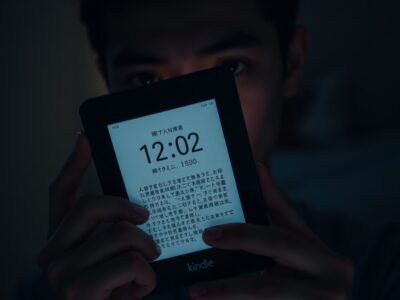
Recuerdo la primera vez que encendí mi Kindle japonés recién llegado de Amazon.
Nuestro cerebro busca coherencia inmediata entre el objeto y su función, ¿no te ha pasado?
Me sorprendió ver la hora desplazada, como si el dispositivo aún soñara con otra geografía lejana.
Detalles
Recuerdo la primera vez que intenté ajustar la hora en mi dispositivo importado.
La pantalla mostraba una hora que no coincidía con mi realidad local.
Explorar los menús del Kindle se sintió como descifrar un mapa sin leyendas.
Me preguntaba constantemente si estaba a punto de alterar algo irreversible.
¿Alguna vez has sentido esa mezcla de curiosidad y cautela al configurar un gadget nuevo?
La opción de sincronización automática parecía la solución más sencilla y obvia.
Sin embargo, el reloj seguía mostrando la hora de Japón de forma persistente.
Fue entonces cuando comprendí que el problema radicaba en la configuración regional.
Cambiar la zona horaria manualmente requirió acceder a un submenú oculto.
La sensación de ver la hora correcta por fin fue enormemente satisfactoria.
Este proceso me enseñó que a veces las soluciones simples necesitan un enfoque indirecto.
La próxima vez que enfrentes un ajuste similar, revisa las preferencias de localización primero.
La paciencia y la exploración metódica suelen ser las mejores herramientas.
Cada dispositivo guarda sus secretos tras capas de menús aparentemente simples.
La clave está en no rendirse ante la primera pantalla confusa.
Al final, ese pequeño triunfo personal hace que la tecnología sea más nuestra.
Conclusión
Cambiar la región del dispositivo a tu país actual solucionará el desfase horario de inmediato.
Dirígete al menú de configuración principal de tu Kindle.
Selecciona la opción “Opciones del dispositivo” o “Configuración del dispositivo”.
Busca y pulsa sobre el apartado “Configuración de fecha y hora”.
Desactiva la sincronización automática si está habilitada.
Elige la opción para seleccionar tu zona horaria manualmente.
Navega por la lista hasta encontrar tu ubicación geográfica actual.
Confirma los cambios y regresa a la pantalla principal.
Verifica que la hora se muestre correctamente en la barra superior.
Si persiste el error, reinicia el dispositivo para aplicar los ajustes.
Este método funciona incluso en modelos con interfaz en japonés.
La clave está en modificar la localización, no solo la hora.
Comprender esto te ahorrará futuras complicaciones con dispositivos importados.
Un ajuste aparentemente complejo se resuelve con conocimiento específico.
La próxima vez que adquieras tecnología internacional, prioriza la configuración regional.
Dominar este principio te convierte en un usuario más estratégico.
La eficiencia tecnológica depende de entender sus reglas básicas de localización.


コメント